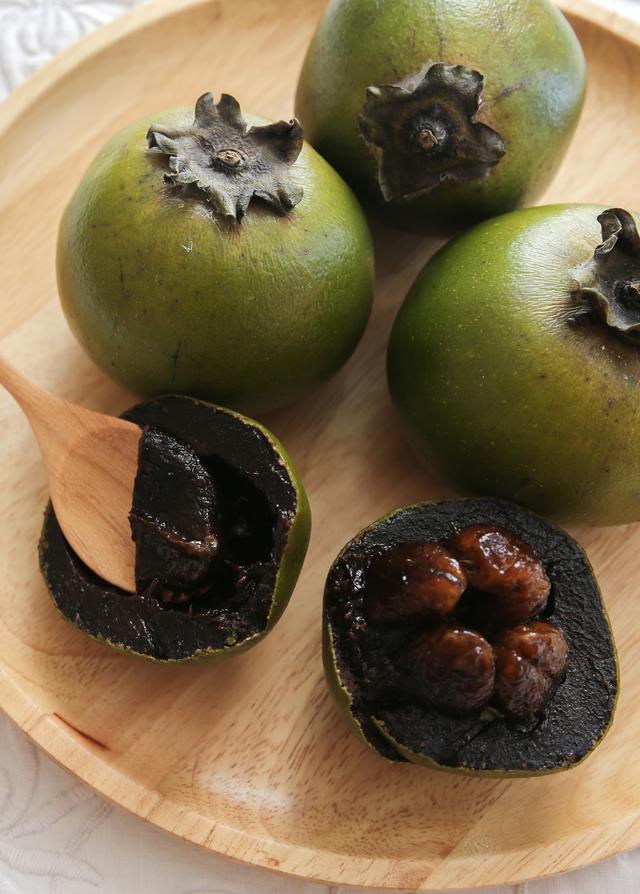
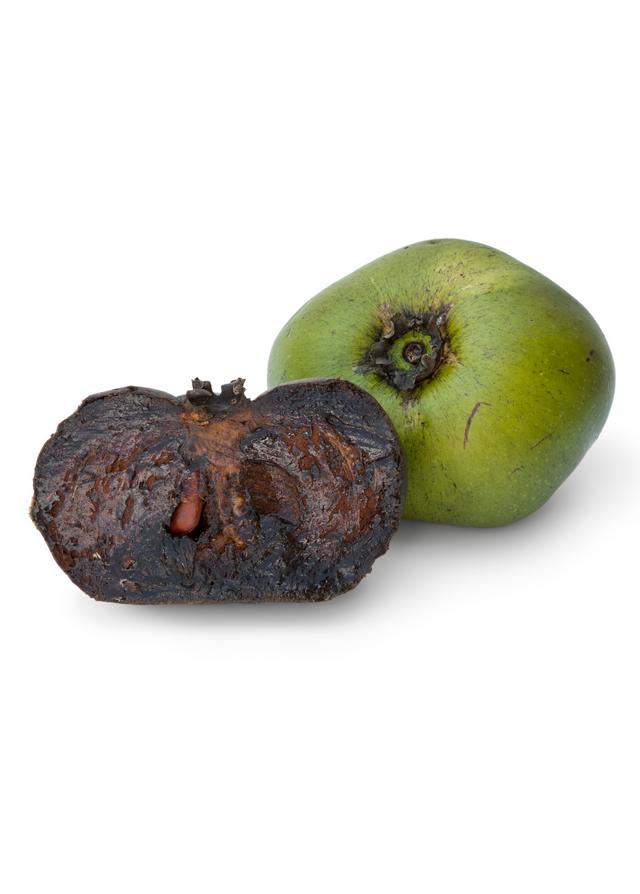
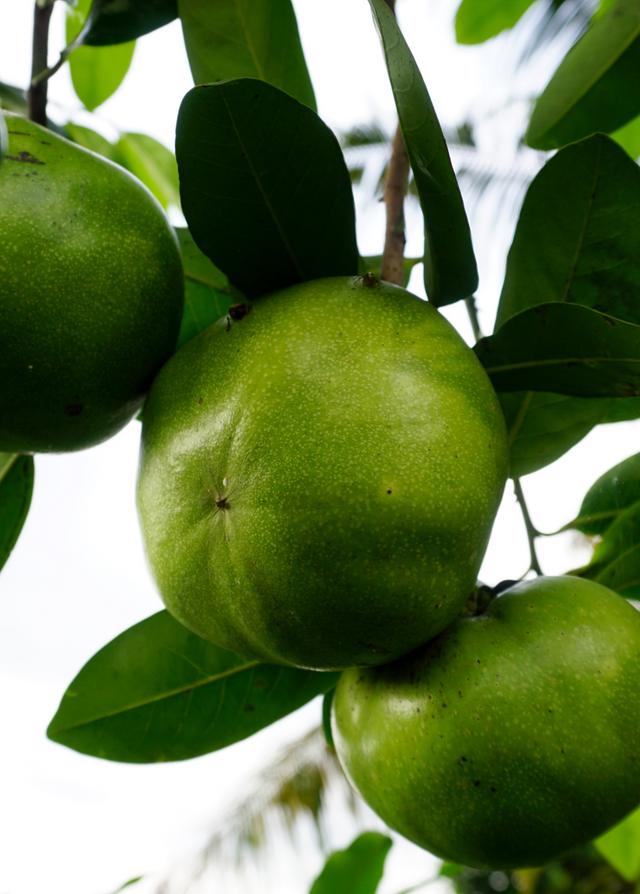
Black sapote, scientifically known as Diospyros digyna, is a tropical fruit tree belonging to the Ebenaceae family, which also includes persimmons. It is native to Mexico and Central America but has been cultivated in various other tropical and subtropical regions around the world. The black sapote tree can grow to a height of 25 to 30 feet and has a spreading, rounded canopy. Its leaves are glossy, dark green, and broad, adding to the tree's dense and lush appearance. The tree is evergreen, maintaining its foliage throughout the year in suitable climates. One of the most distinctive features of the black sapote is its fruit. The fruits are tomato-like in appearance, initially green, and turn a dark brown to black when ripe. They are typically about 2 to 4 inches in diameter. The inside of the fruit contains a soft, custard-like pulp that is dark brown, almost black in color, giving the fruit its common name. The taste of the ripe fruit is mild and sweet, often described as a chocolate pudding-like flavor, which makes it a favorite for desserts and sweet dishes. The black sapote flowers are small and inconspicuous, with creamy-white petals. The tree usually flowers in late spring or early summer, with the fruit ripening several months after flowering. Growing black sapote requires a warm, frost-free climate, as the tree is sensitive to cold temperatures. It prefers well-drained, fertile soil and requires regular watering, especially during dry periods. The tree can be propagated through seeds or grafting and is often grown in orchards for fruit production as well as in home gardens for its decorative appearance and unique, delicious fruits.
Black Sapote ‘Wilson’ (Diospyros nigra)
Sold out · back soon
- Food forest layer
- Canopy
- Light
- Full Sun, Part Shade
- Harvest season
- Winter
- Sizes
- Large Coconut Coir Pot, X-Large Nursery Pot
Grown in our all-natural soil blend and shipped nationwide in a plantable pot.
You might also like
Canopy layer
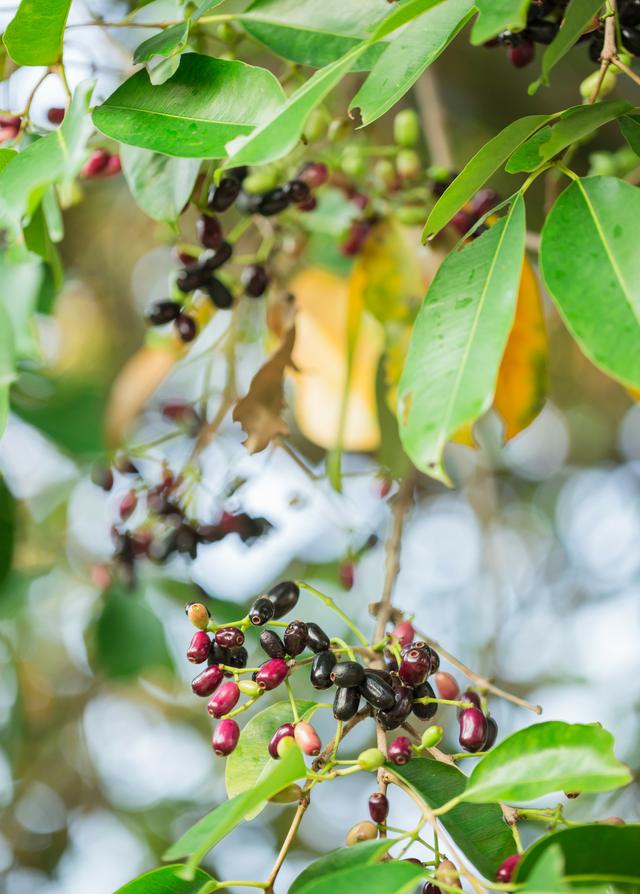
Jamun (Syzygium cumini)
From $19.95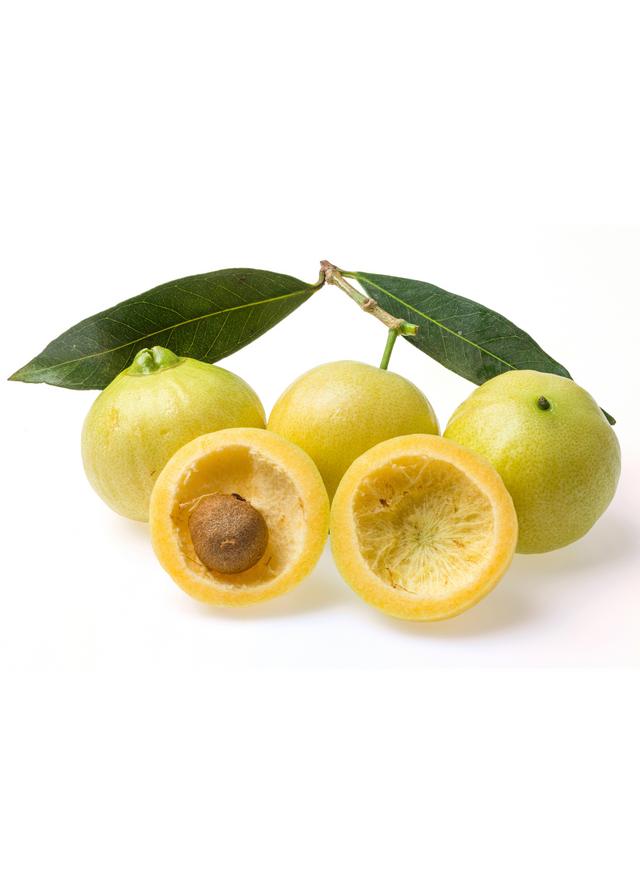
Canopy layer
Rose Apple (Syzygium jambos)
From $24.95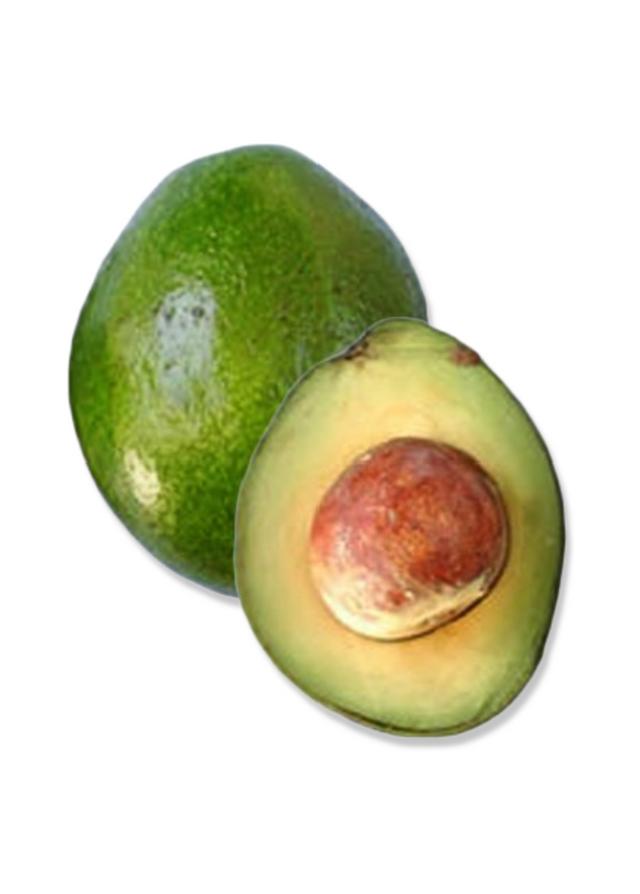
Canopy layer
Avocado 'Monroe' (Persia americana)
From $99.95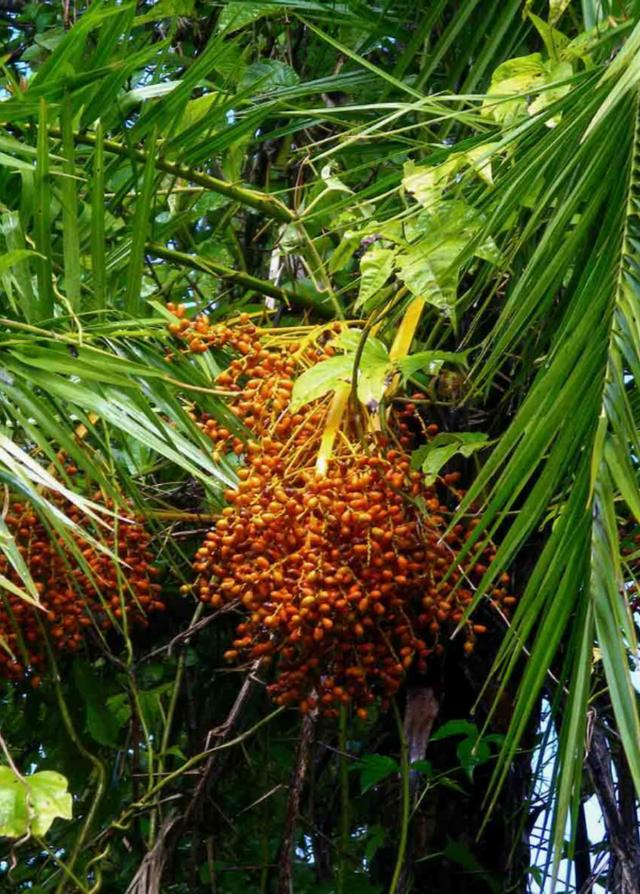
Canopy layer
Senegal Date (Phoenix reclinata)
From $24.95Browse all black sapote trees for sale.
Growing tips: read our black sapote growing guide.