Sweet, Chocolate-Like Pods Without Caffeine
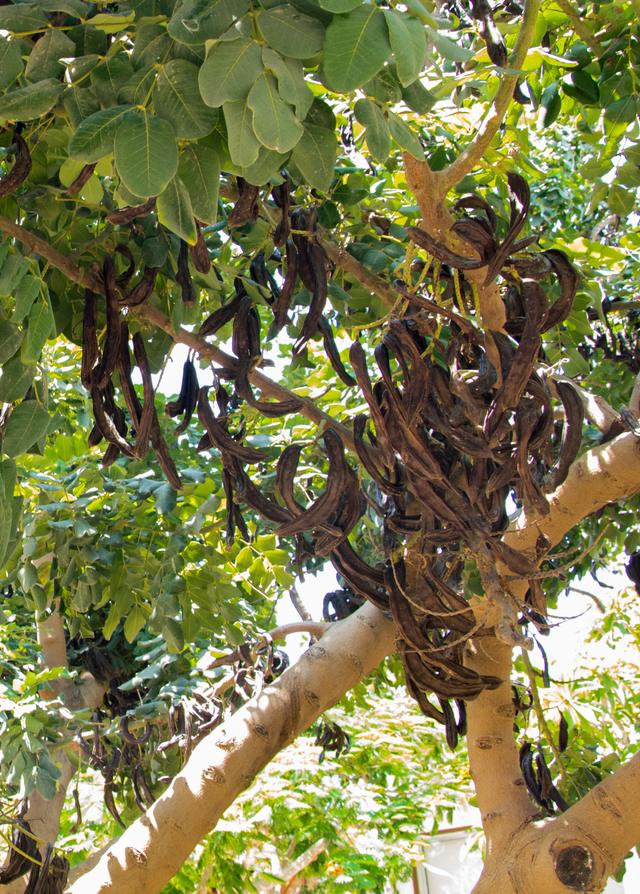
Carob ( Ceratonia siliqua ), also known as St. John’s Bread, is a long-lived evergreen tree in the Fabaceae family, related to Butterfly Pea and Lablab Bean . Native to the Middle East, this striking tree develops a feathery canopy of deep green, leathery leaves atop a trunk with twisted, reddish-brown bark. Because the leaves are slow to burn, Carob is also grown by many as a natural fire barrier.
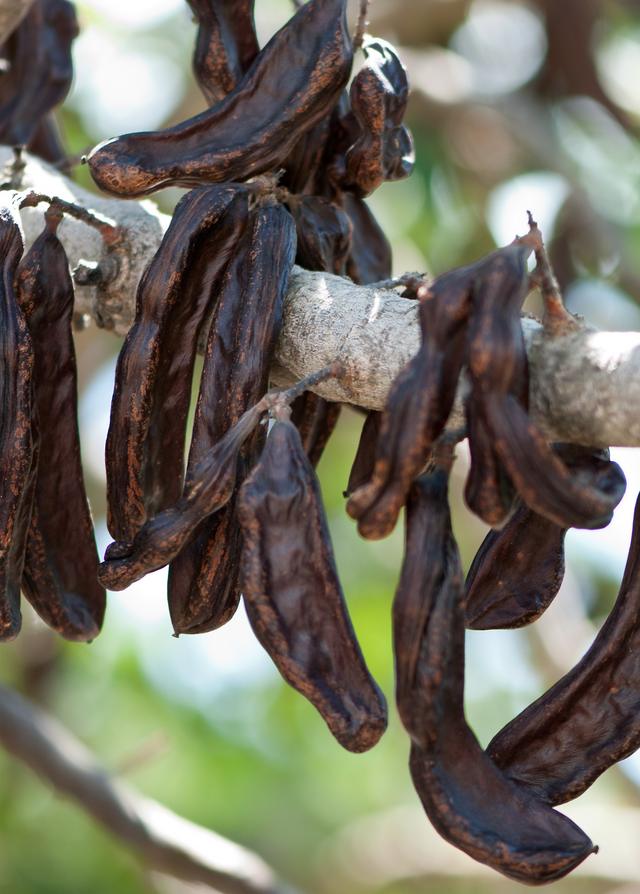
Red, single-sex flower clusters develop in autumn, attracting bees and flies with their musky fragrance. Carob trees are dioecious, meaning a second tree of the opposite sex is required for pollination and pod production. Once pollinated, the flowers develop into glossy brown, tough-fibered pods containing seeds that rattle when ripe.
Cultural & Culinary Significance
Carob's primary use is culinary, where its naturally sweet, bean-like pulp provides a flavorful alternative to cacao. The pods can be eaten out of hand or dried and ground into a powder for cooking and baking. Carob has similar flavor properties to chocolate while naturally lacking the theobromine found in cacao, making it a popular chocolate substitute for those who wish to avoid the compound.
Why Grow Carob?
- Grow a long-lived evergreen tree with a distinctive feathery canopy and twisted reddish-brown bark.
- Enjoy sweet, bean-like pods with chocolate-like flavor that can be eaten fresh or dried into powder.
- Harvest glossy brown pods with tough fibers and seeds that rattle when they are fully ripe.
- Add a useful landscape tree whose slow-burning leaves can serve as a natural fire barrier.
- Support pollinators with fragrant autumn flower clusters that attract bees and flies.