Why grow a mulberry tree?
Mulberries are among the fastest fruit trees to bear. Cutting-grown and grafted trees often fruit in their first or second year, handle poor soil and drought once established, and feed birds and pollinators as well as people.
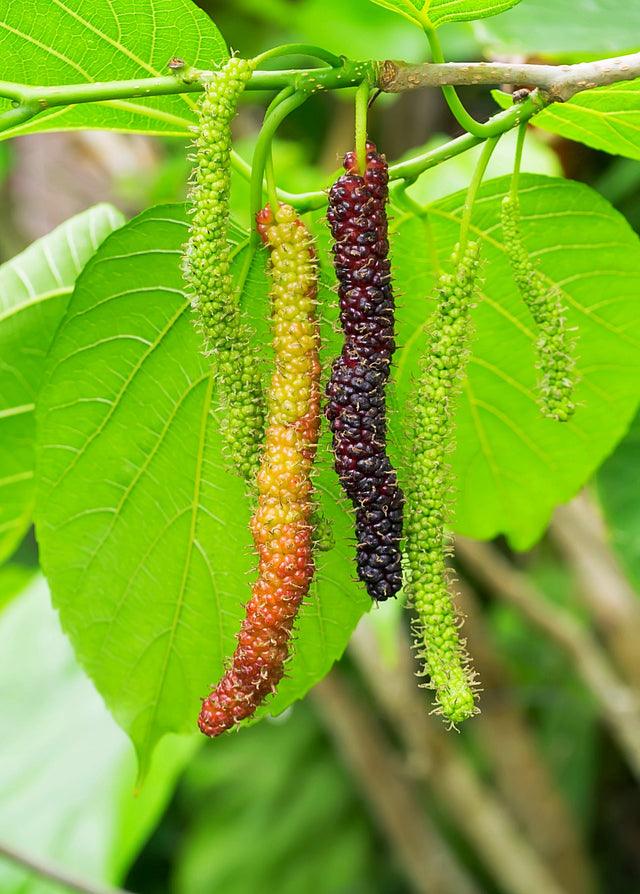
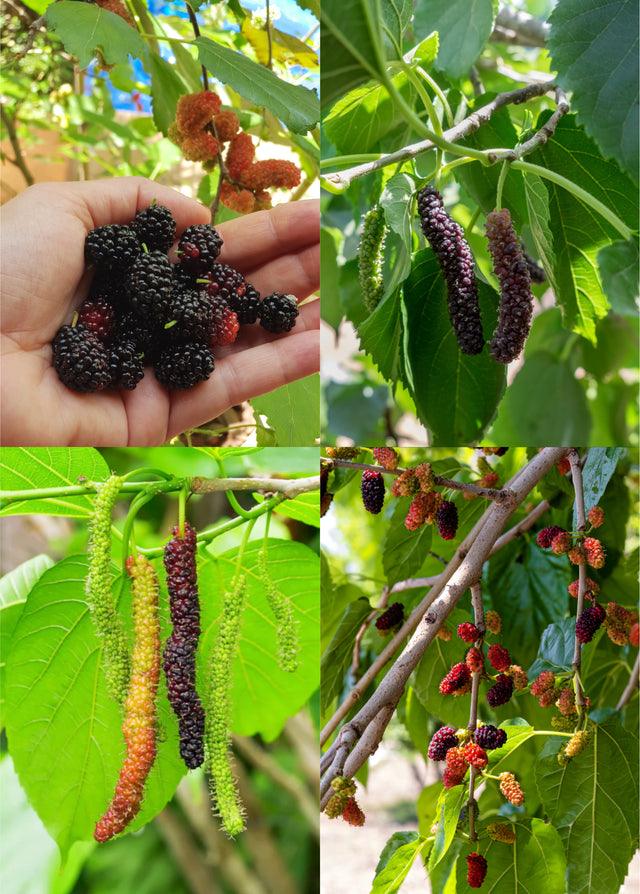
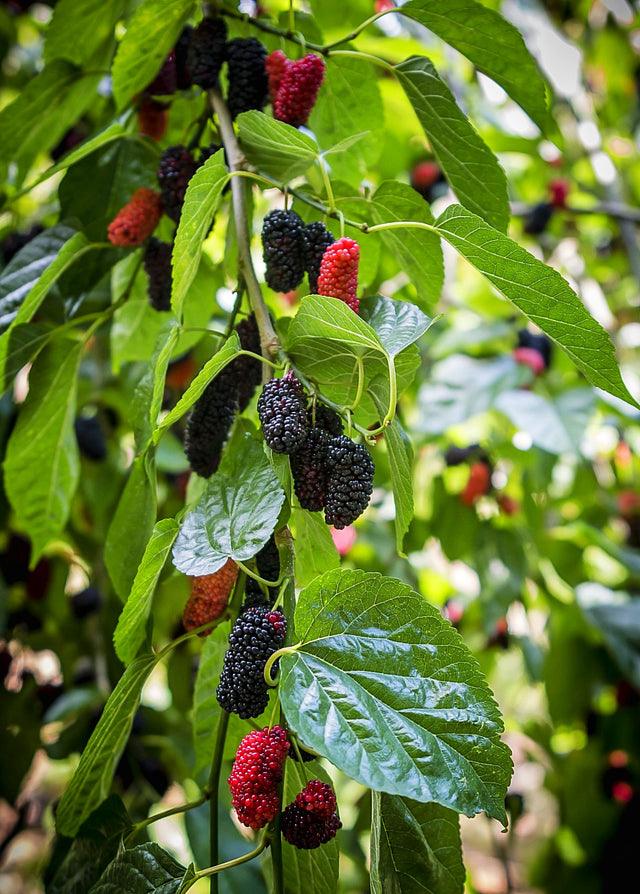
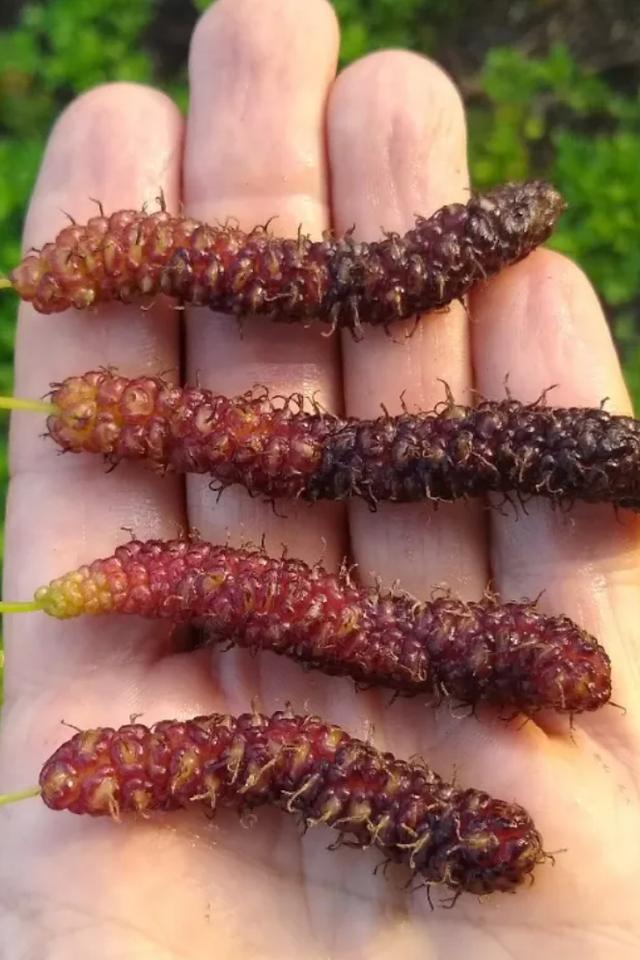
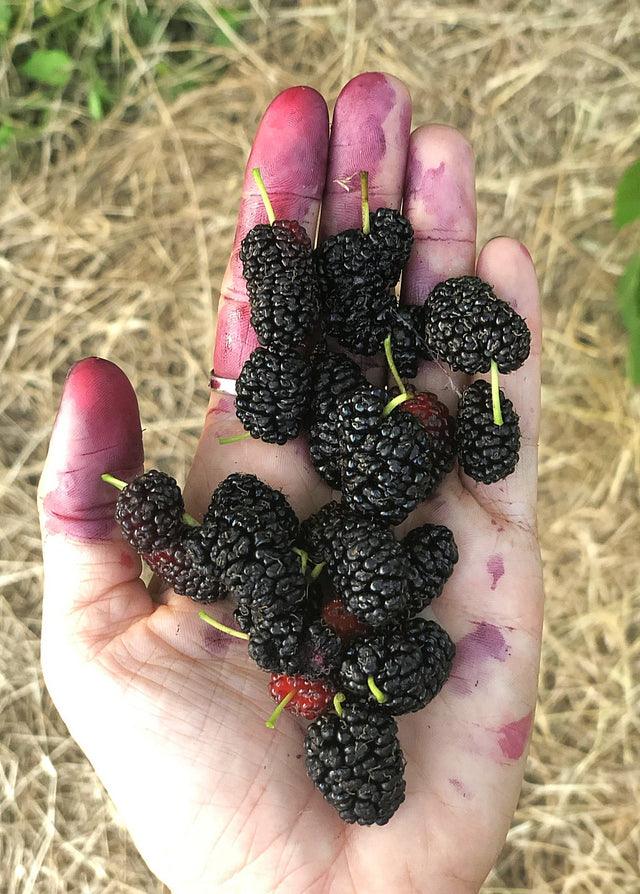
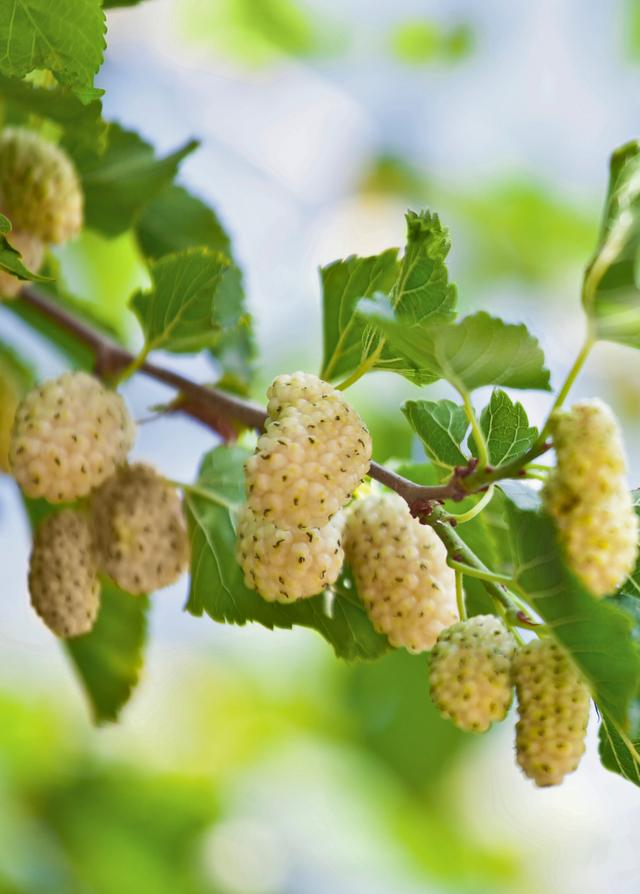
The fruit looks like an elongated blackberry and ranges from tart-sweet black berries to honey-sweet white ones. Long-fruited types such as Pakistan mulberry produce berries 3 to 4 inches long.
Choosing a variety
- Pakistan and Skinner: long, sweet fruit on vigorous trees for warm climates.
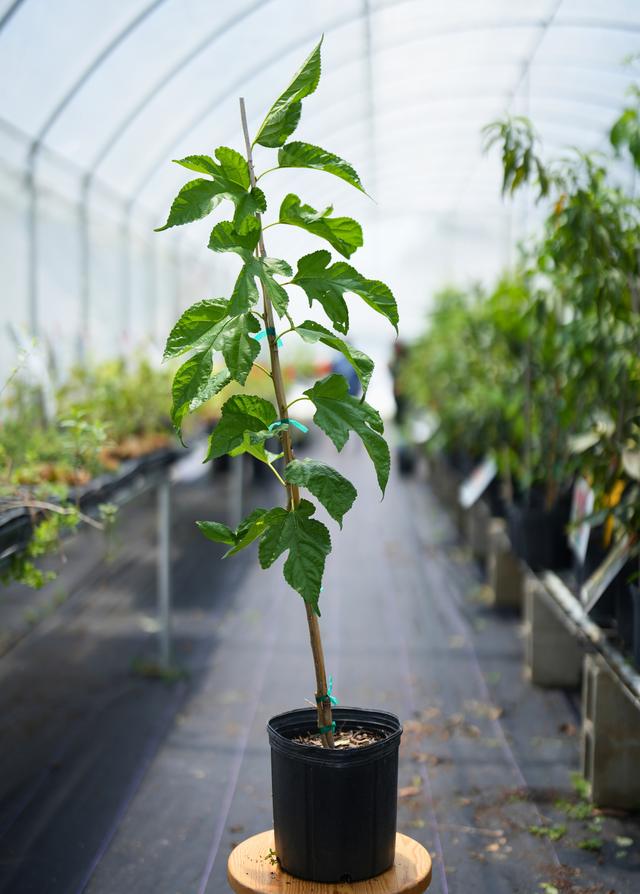
- Everbearing dwarf types: compact plants that fruit in flushes and suit containers.
- White mulberry (Morus alba): very sweet, low-acid fruit that is excellent dried.
- Hardiness varies by species, roughly zones 5 to 10, so match the variety to your winters.
Planting and care
Plant in full sun to light shade in any well-drained soil. Water deeply for the first season, then only during long dry spells.
Feed lightly in spring with compost or a balanced organic fertilizer; too much nitrogen gives leaves instead of fruit.
Prune right after the main harvest to control height. Mulberries fruit on new growth, so summer pruning sets up next year's crop.
Harvesting
Berries ripen over several weeks in spring. Pick when they are fully colored and pull away easily, or spread a sheet under the tree and shake the branches. Mulberries keep only a day or two, so eat, freeze or dry them quickly.