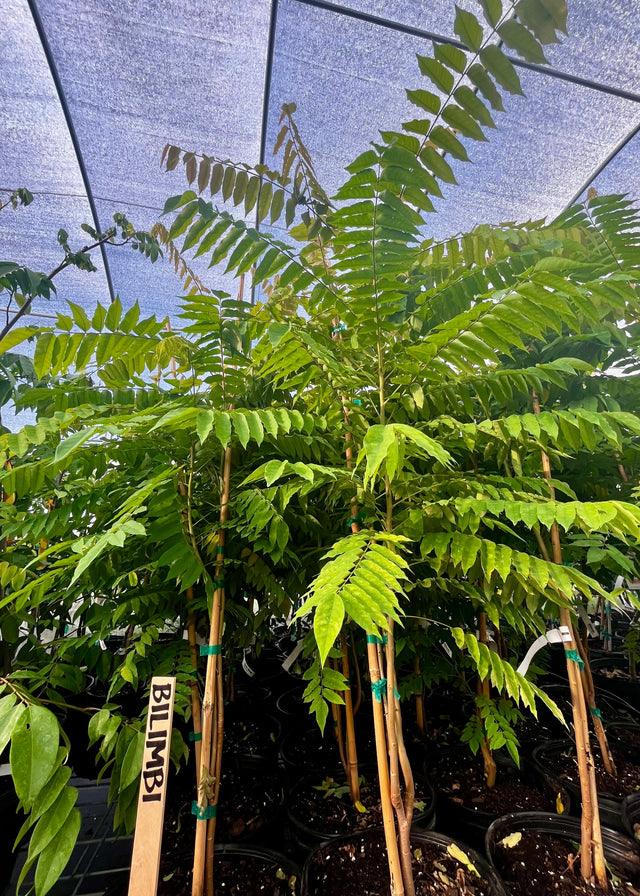
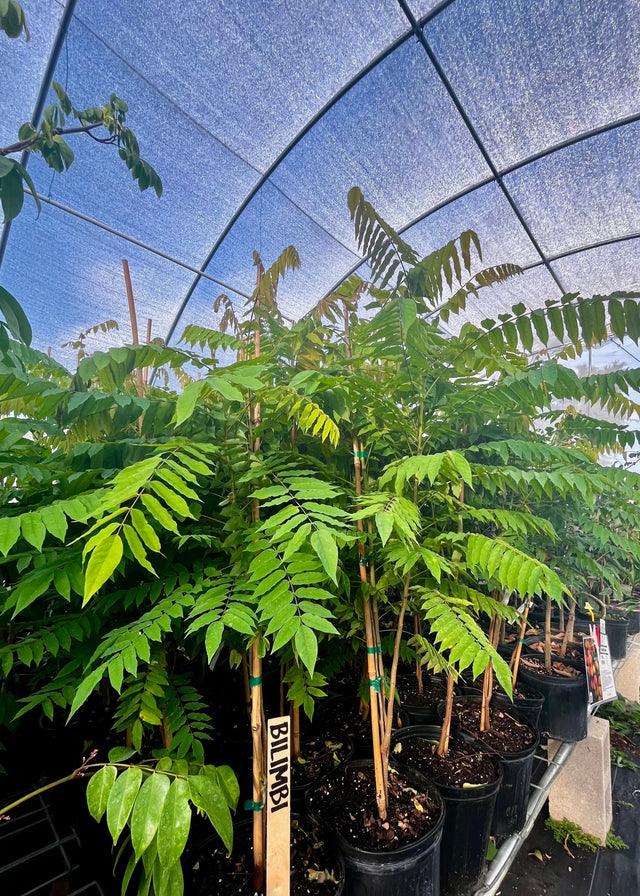
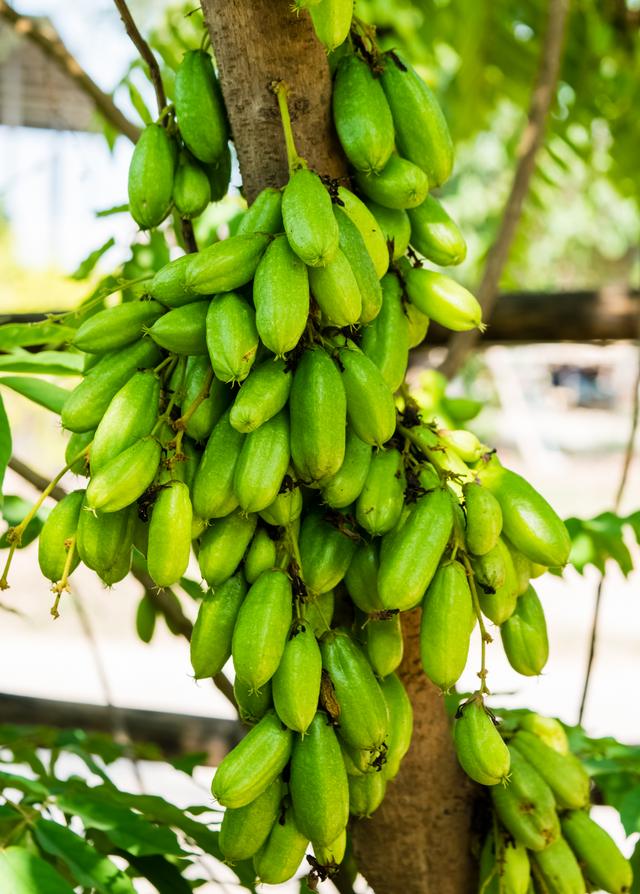
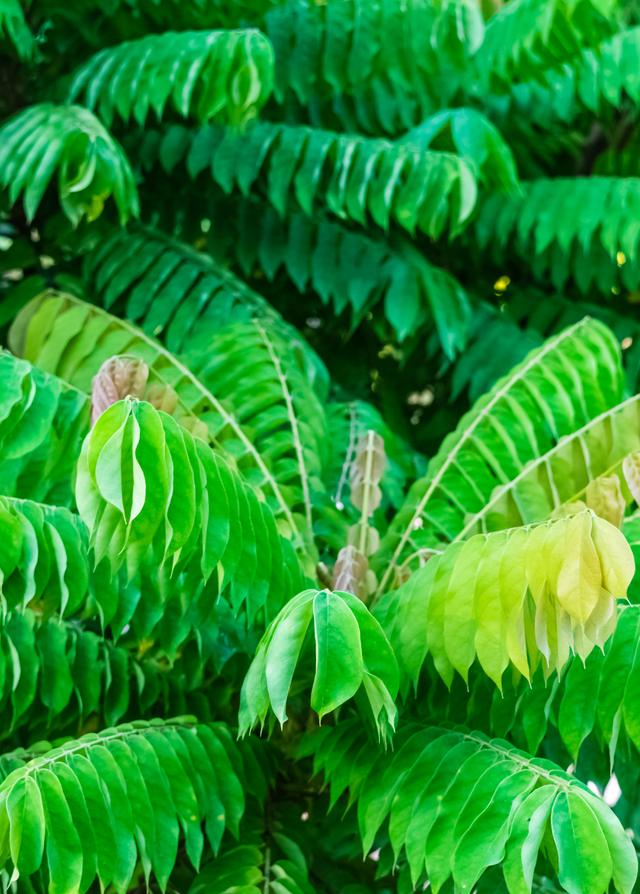
One exotic plant that will pique the interest of any life long food forester or curious chef is Bilimbi ( Averrhoa bilimbi , Cucumber Tree Fruit, Tree Sorrel, Kamias, Mimbro). Bilimbi grows wild and in cultivation in the warmest parts of Southeast Asia, throughout Indonesia, Malaysia, the Philippines, India, and Sri Lanka.
Bilimbi grows shrublike, from a short trunk that expands with upright branches. As a member of the Averrhoa genus, it is similar in growing nature and closely related to starfruit trees, but is different in looks, fruit, flavor, and use. This tropical tree species is very cold sensitive, and needs close oversight in its early growing stages.
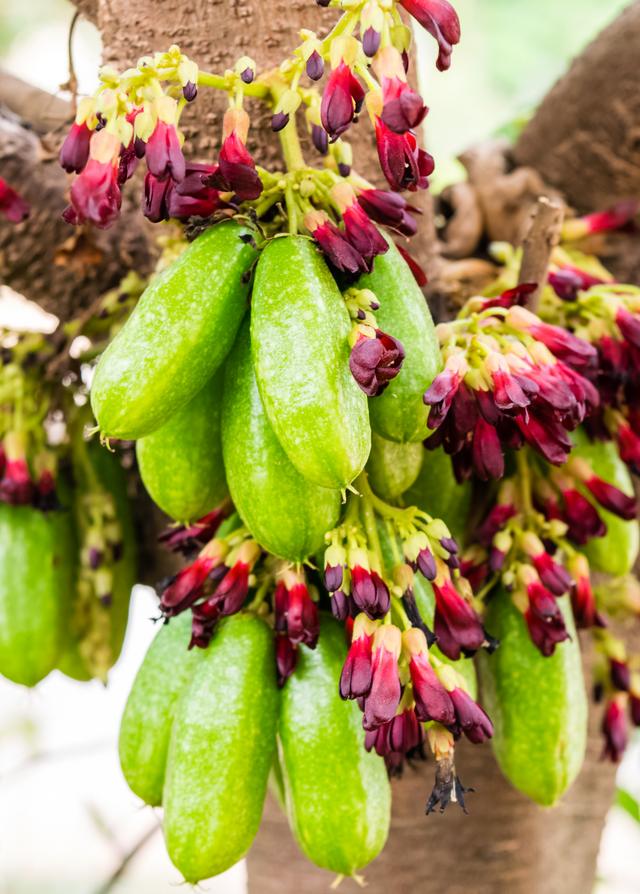
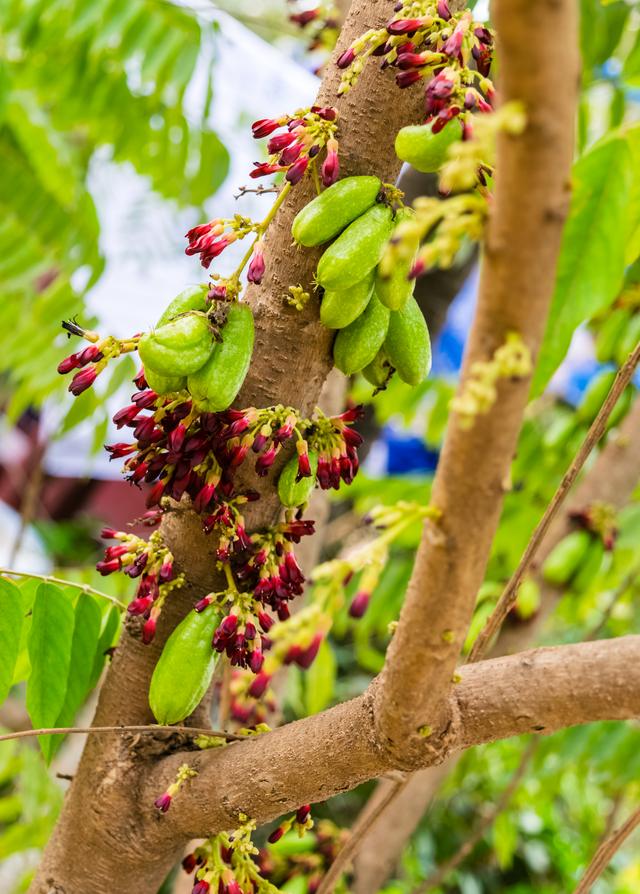
Bilimbi trees will flower directly from the trunk in the late winter and early spring. The cylindrical fruits will follow shortly after, changing color from bright green to yellow-ivory over time. Fruits may fall to the ground when ripe, and will bruise easily because of thin skin. Looking out for a change in color is a good way to gauge fruit readiness. Bilimbi bears sour and acidic fruit that makes it a staple in any plate that needs an acidic balance. The fruit is rarely eaten raw, but the juice can be used in place of vinegar to add a bitter element to salads, soups, curries, and more. The oxalic acid content of bilimbi fruit is what contributes to its trademark taste and place on plates around the world.
Fun Fact: Bilimbi is related to Star Fruit !