Striking Ornamental Banana with Edible Fruit
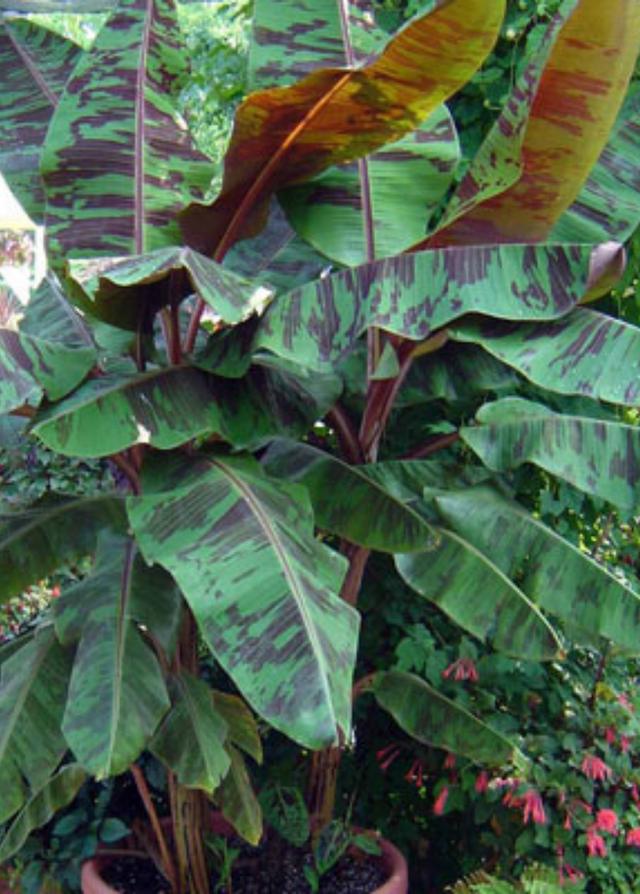
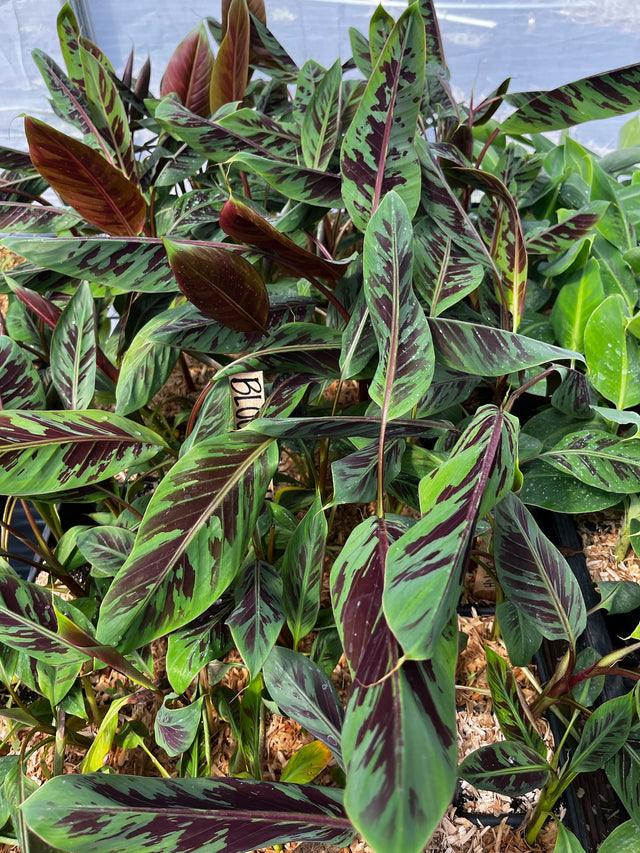
The Blood Banana ( Musa acuminata var. zebrina ), also known as Red Banana or Zebrina Banana, is a stunning ornamental banana plant known for its large, vibrant green leaves streaked with deep red and purple hues. These dramatic leaves make it a striking addition to tropical gardens, landscapes, and container plantings. Native to Southeast Asia, Blood Banana thrives in warm, tropical environments and brings an exotic flair to the garden or indoor spaces when grown in containers.
While primarily grown for its striking foliage, Blood Banana also produces small, edible bananas. The fruit is sweet but contains numerous seeds, giving it a seedy texture that makes it more suitable for ornamental interest than large-scale fruit production. In its native regions, the fruit may be enjoyed fresh or used in local culinary dishes, but the plant's true appeal is its bold foliage, fast growth, and ability to create an instant tropical look.
Cultural & Culinary Significance
Blood Banana is valued primarily as an ornamental plant, particularly for its dramatic foliage and tropical appearance. Its small edible bananas can be eaten fresh or incorporated into local dishes, although the numerous seeds make the fruit less desirable than cultivated dessert banana varieties.
Why Grow Blood Banana?
- Dramatic green leaves streaked with deep red and purple hues
- Produces small, sweet, edible bananas
- Fast-growing herbaceous perennial with a lush tropical appearance
- Makes a striking showpiece in tropical landscapes and container gardens
- Can be grown outdoors in warm climates or as a container plant in cooler regions