Nutrient-Dense Superfruit
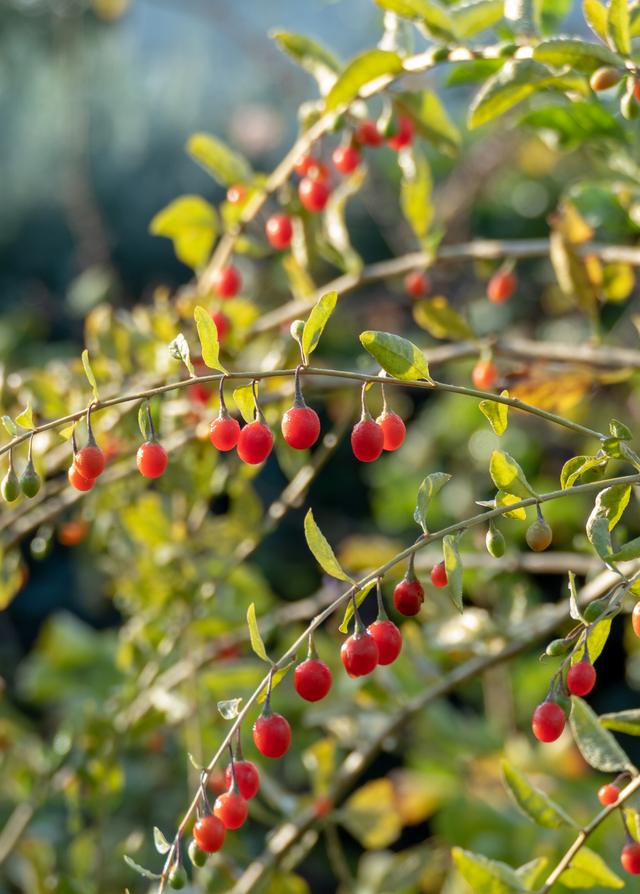
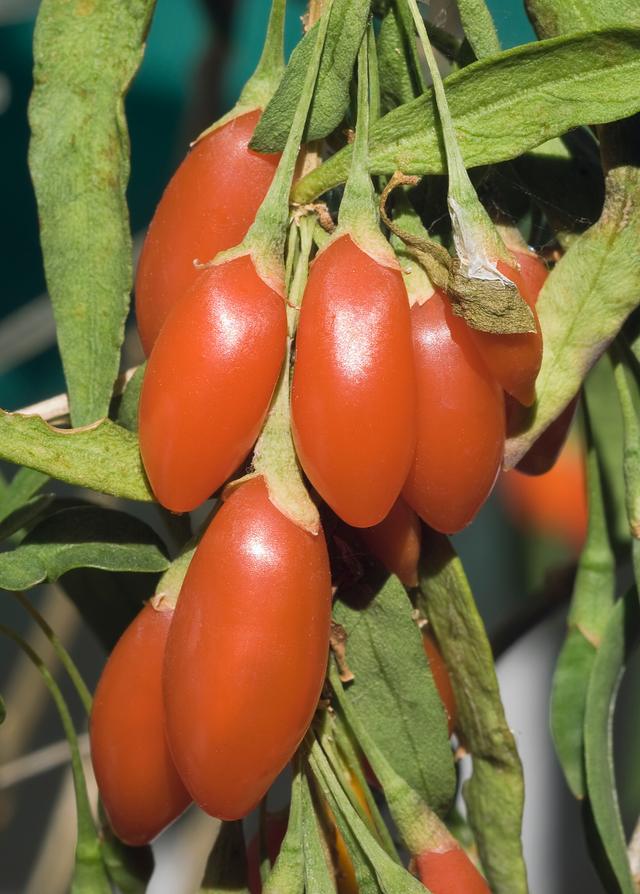
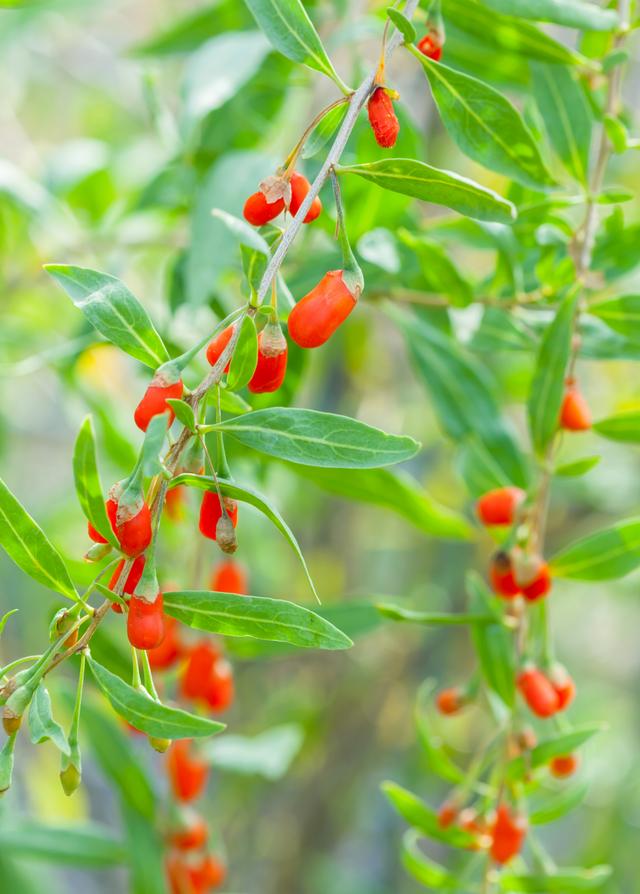
Red Goji Berry (Lycium barbarum), also known as Wolfberry or Matrimony Vine, is a deciduous shrub prized for its nutrient-dense red berries. Used in traditional Chinese medicine for centuries, these small, bright red berries are packed with antioxidants, vitamins, and minerals, making them a popular superfood. Their sweet and slightly tart flavor makes them delicious fresh or dried.
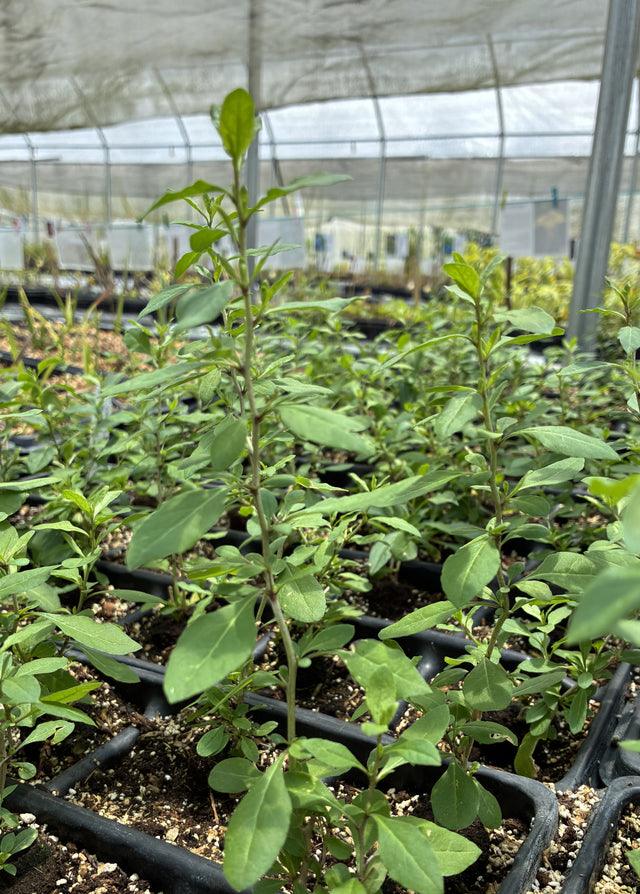
The plant itself is hardy and drought-tolerant, growing well across a variety of climates and soil types. Slender, lance-shaped green leaves grow densely along long, arching branches, while the sprawling, vining growth habit makes Red Goji Berry well suited to training along a trellis or allowing to grow freely. The berries can be enjoyed fresh or dried and used in teas, smoothies, trail mixes, baked goods, and cooking.
Cultural & Culinary Significance
Goji berries have a long history in traditional Chinese medicine, where they have been used to support immune function, eye health, energy, and longevity. The berries are rich in antioxidants, particularly zeaxanthin, along with vitamins A, C, and E. They also provide fiber, iron, and protein.
Fresh or dried berries can be added to teas, smoothies, trail mixes, and baked goods, or enjoyed on their own. Their mildly sweet and tart flavor and chewy texture make them a versatile addition to the kitchen.
Why Grow Red Goji Berry?
-
Produces small, bright red berries with a sweet and slightly tart flavor
-
Nutrient-dense fruit containing antioxidants, vitamins, minerals, fiber, iron, and protein
-
Long history of traditional use in Chinese medicine
-
Hardy and drought-tolerant once established
-
Sprawling branches can be trained along a trellis or allowed to grow naturally