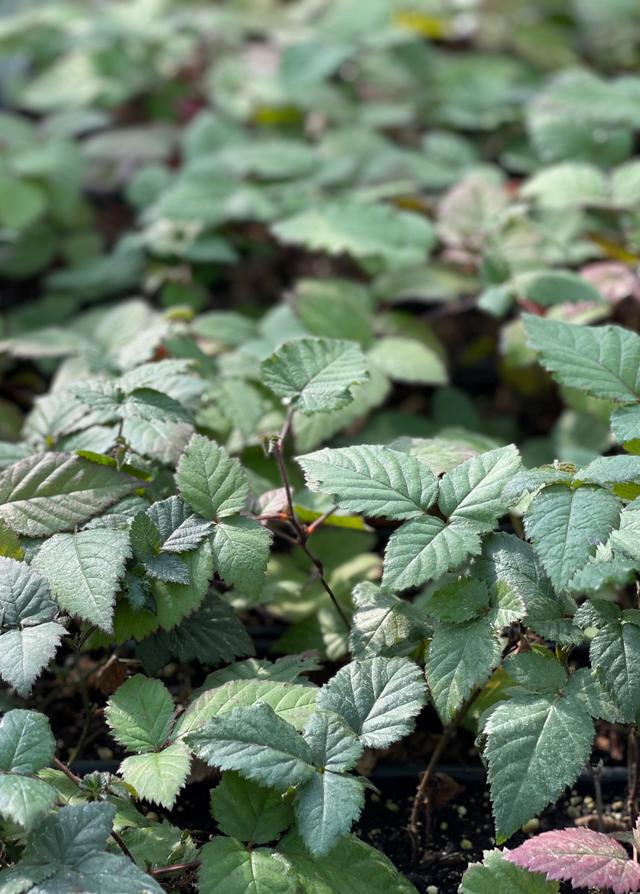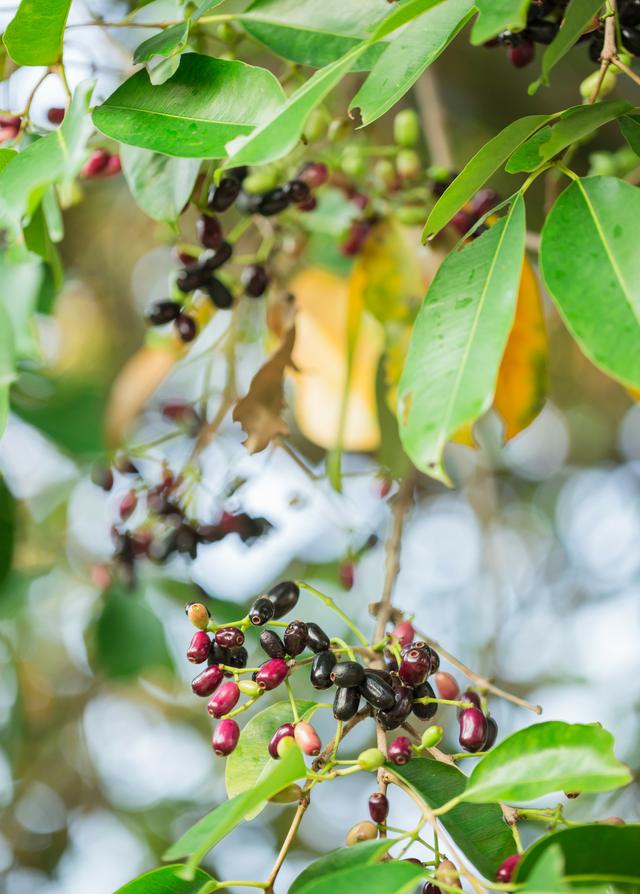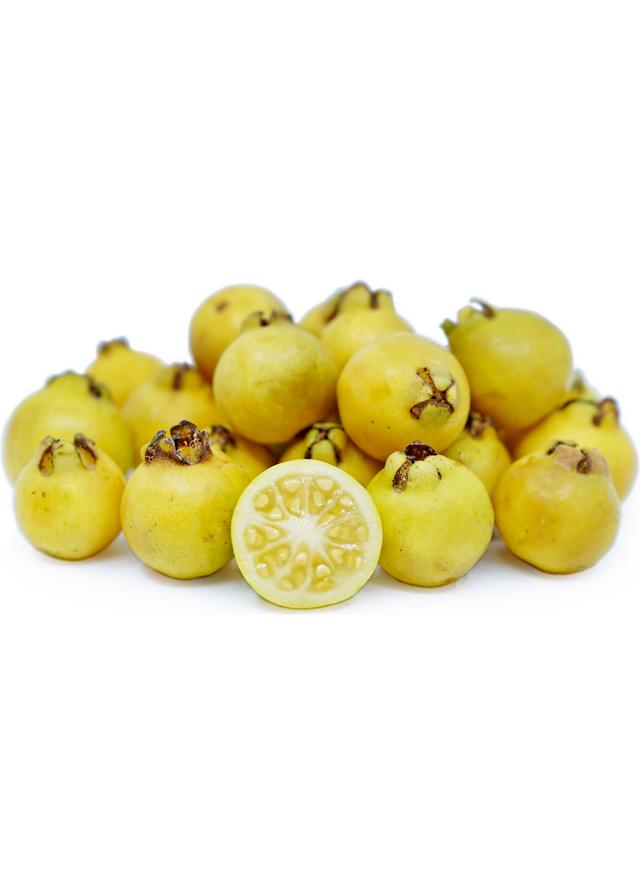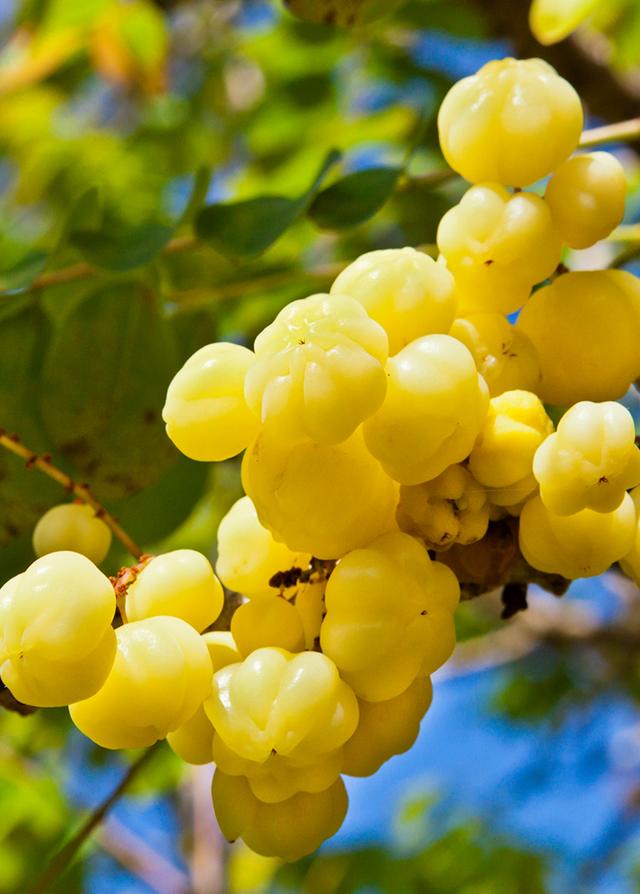
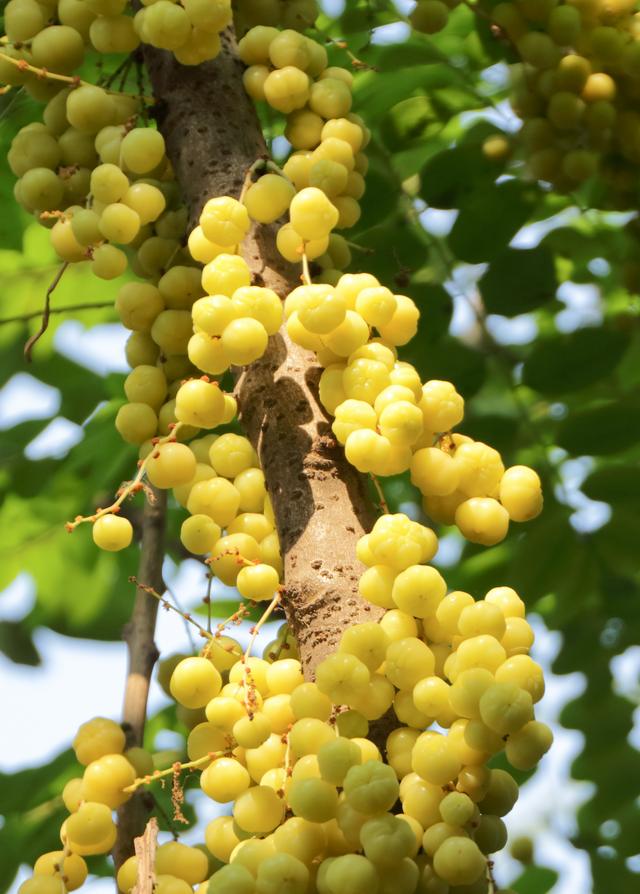
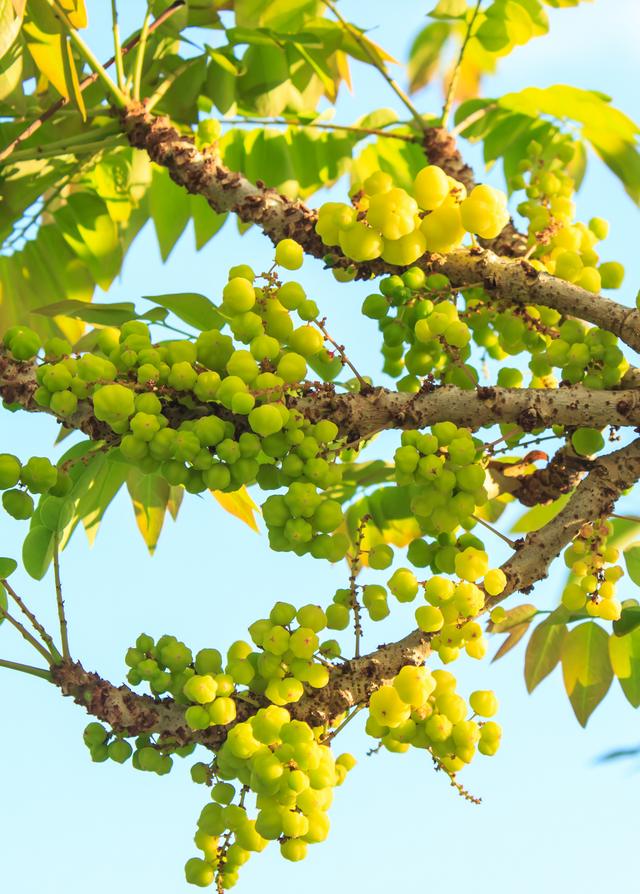
The Otaheitie Gooseberry, or ‘Grosella’ as it is commonly called, is a deciduous tropical to subtropical fruiting tree thought to be native to Madagascar. Part of the Euphorbiaceae family, it is related to the rubber tree, cassava, and castor-oil plant. Unlike its other gooseberry namesakes, the Grosella bears a rather sour-acidic flavor signature which separates it from the rest.
Grown as a shrub or tree, the Grosella grows dense crowns of canopies covered in alternating ovate, pointed leaves. The medium-speed growing foliage sports smooth tops and blooming undersides attached to rough branches. These mucilaginous leaves can be crushed and used as a poultice on sciatica, lumbago and rheumatisms. When flowering, blossoms burst open with pink-to-red cross-shaped clusters. Waxy inch-long Grosella fruits ripen in colors ranging from pale-yellow to creamy-white and ripen into ribbed fruits bearing juicy, acidic flesh. In their stone center, Grosella fruits house 4 to 6 seeds, used medicinally for cathartic properties.
Slice away the stone and prepare the fruit by sugaring and setting it aside for a day to balance acidity. Alternatively, cook the flesh and press the fruits to separate the stones and use the flesh for chutney, juice, preserves or candy. When cooked in sugar, the Grosella turns to a ruby-red jelly. In India, they believe the fruit enriches the blood and is often taken as a liver tonic. Learn your favorite use for the unique Grosella!