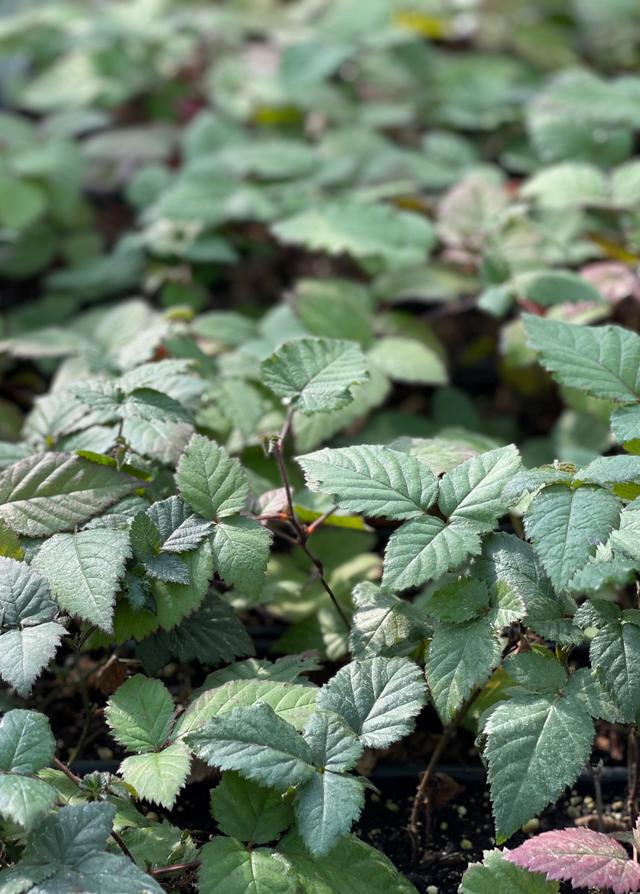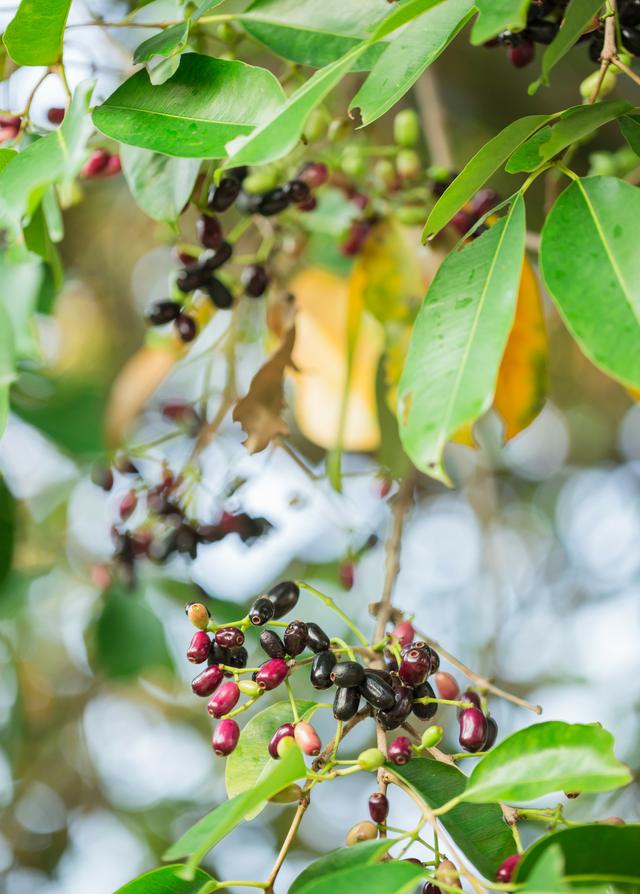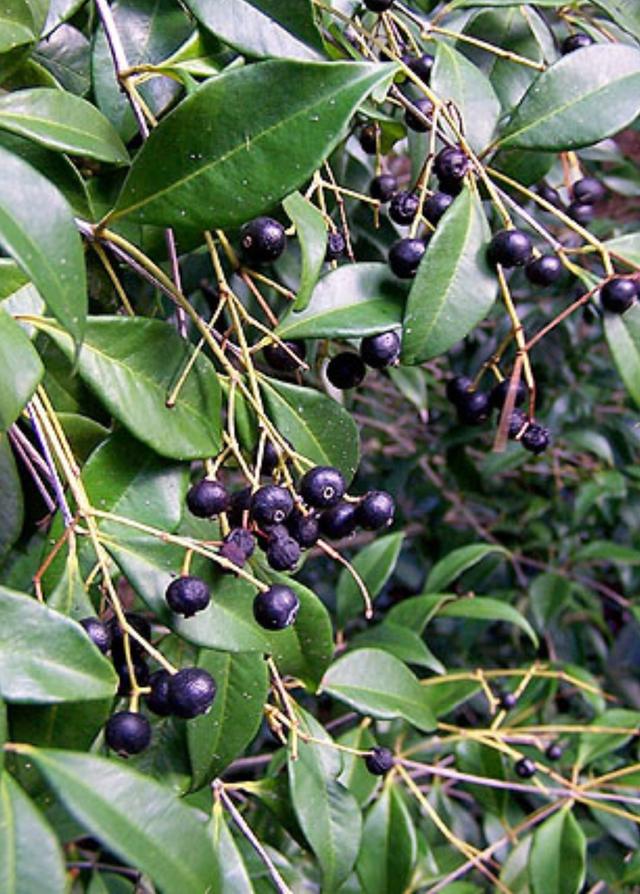
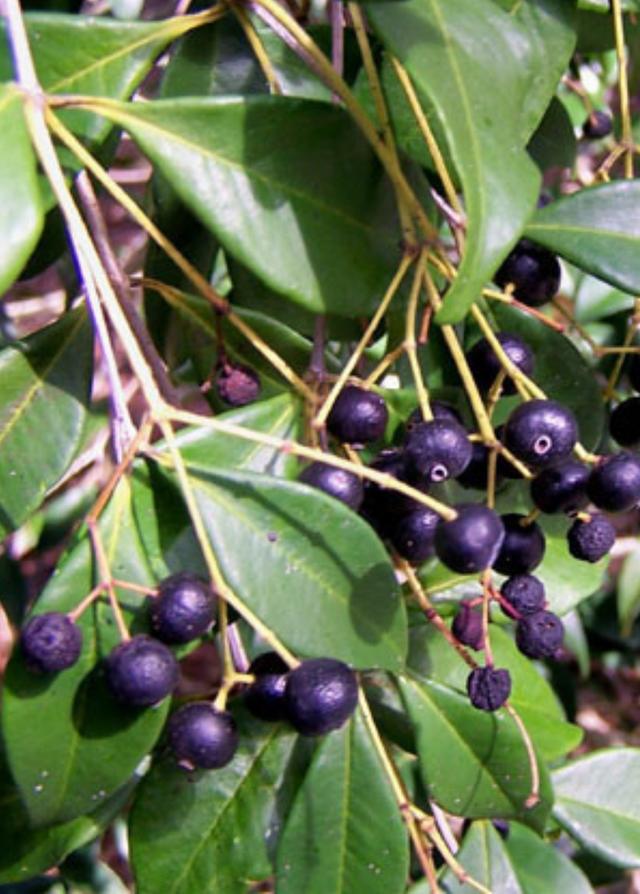
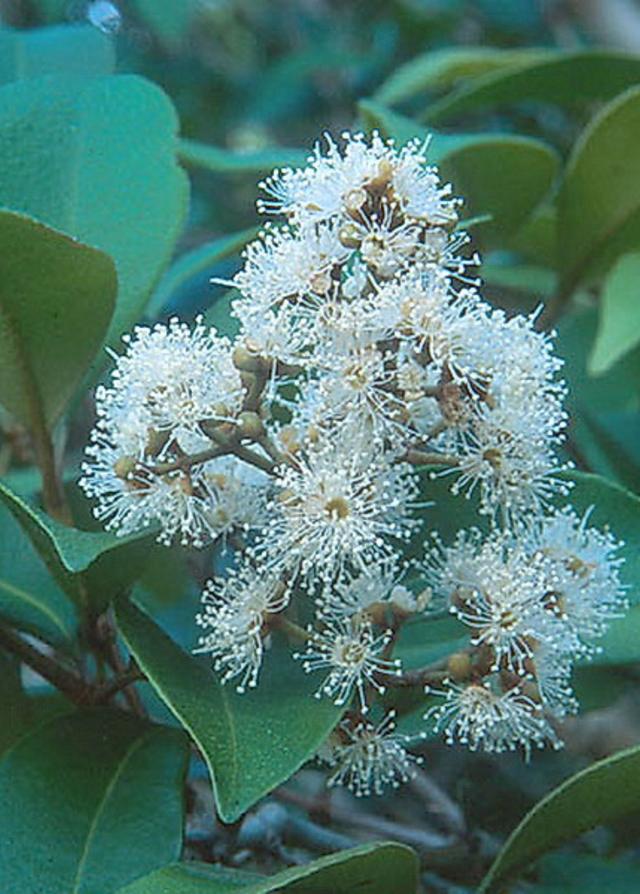
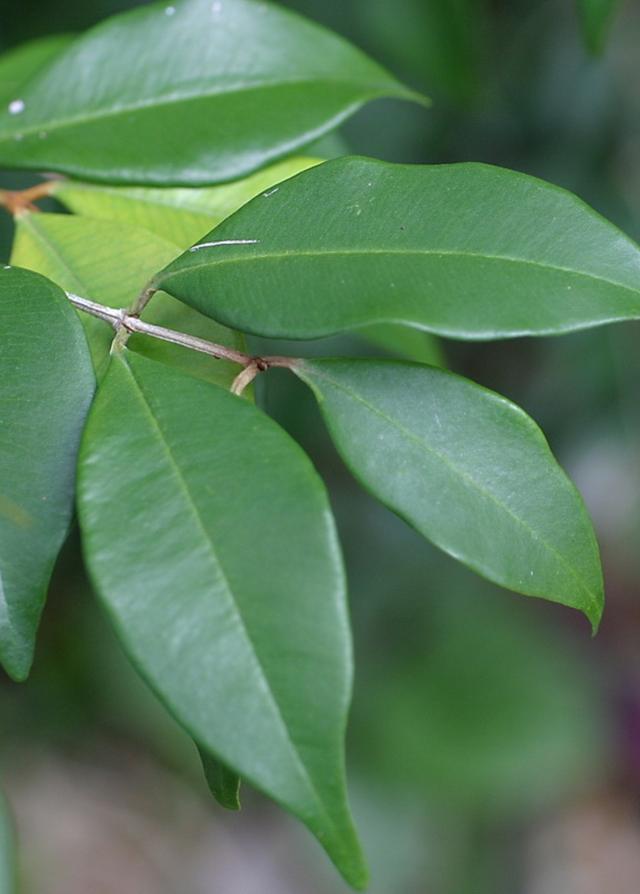
Spice Wood, or Pale Lidflower, is a beautiful small tree or shrub native to South Florida, where it is considered endangered, Mexico, the West Indies, and Central America. It grows 15 to 20 feet tall with a narrow crown, glossy evergreen leaves, white flowers, and colorful fruit.
Spice Wood is named for its aromatic flowers and foliage that are characteristic of Myrtaceae, the Myrtle family. White to cream-colored flowers bloom from March to September with a sweet fragrance, and the dark green leaves give off a spicy scent when crushed. Edible red and black berries ripen in the fall and can be eaten fresh, and the dried leaves can be brewed into an herbal tea. In the West Indies, herbal Spice Wood tea is used medicinally to treat upset stomachs, diarrhea, sleeplessness, and fatigue.
Birds also enjoy the berries, and butterflies and hummingbirds are attracted to the nectar, making it a pollinator-friendly tree that can be used as an accent shrub, hedge, foundation planting, or espalier. It grows in rich, well-draining, organic soil in full sun to partial shade. Spice Wood is hardy in USDA zones 9+ and can be grown in containers and brought in for the winter in colder zones.
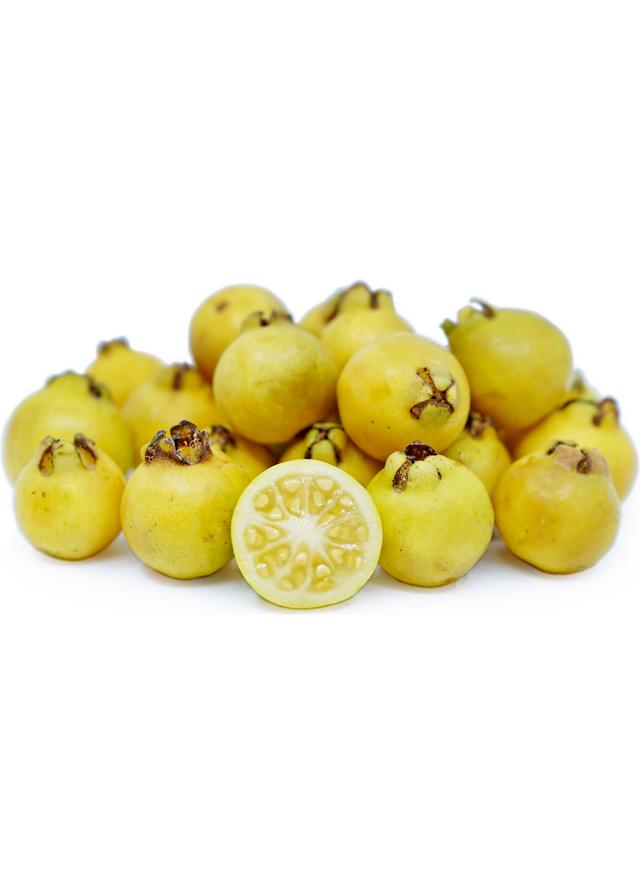
Spice Wood is related to Jaboticaba and Guava!